Morgan Griffin · 14 October 2026
Delwyn Road Repairs Highlight Links Between Farm Timelines and Public Resource Access
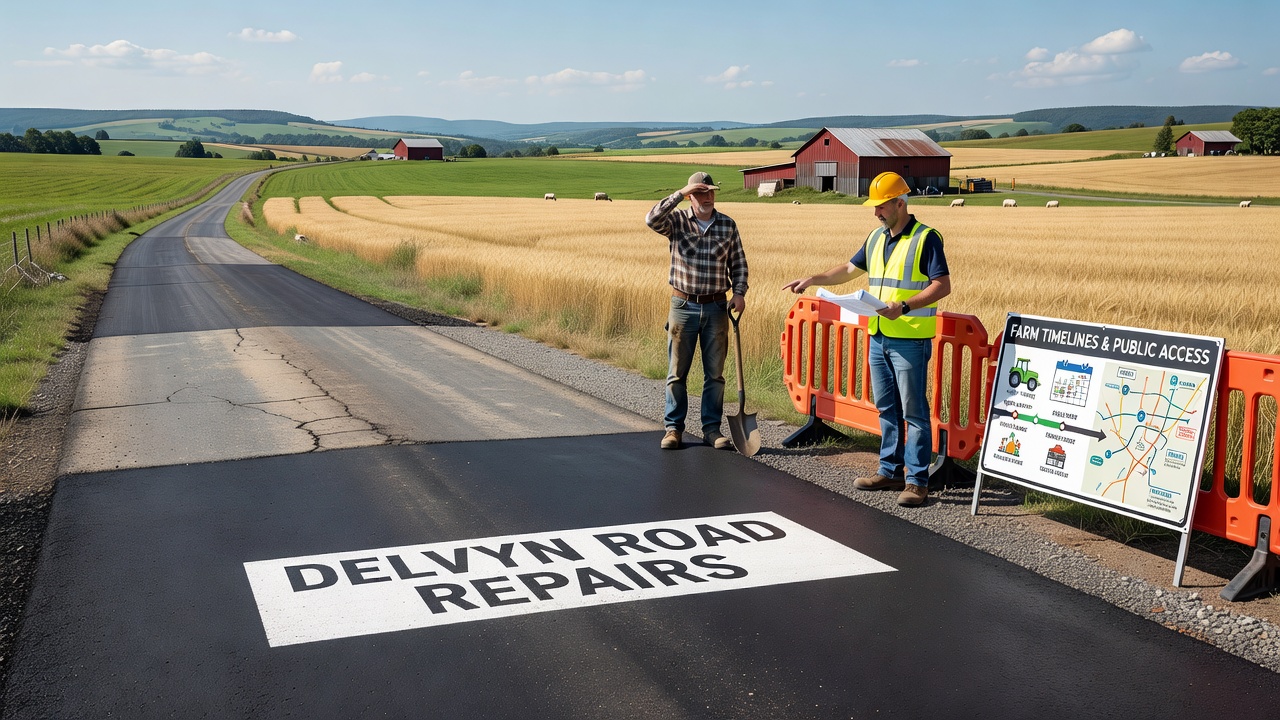
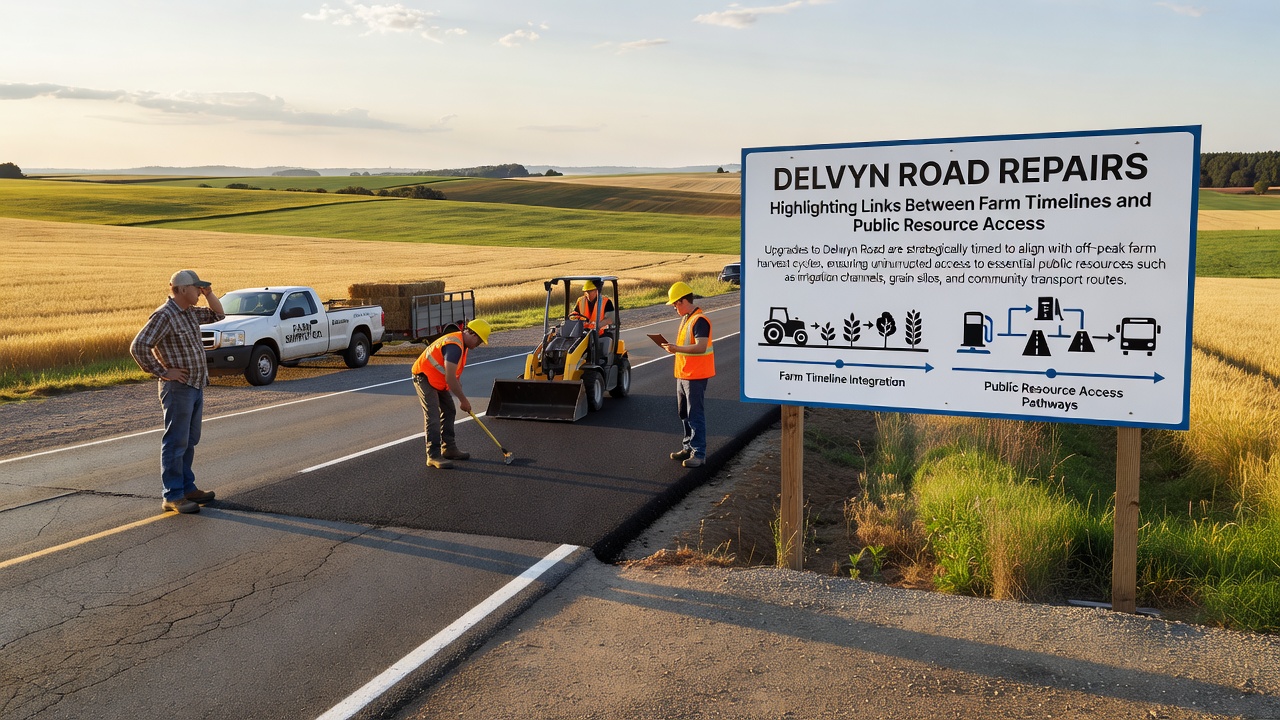
Delwyn road repairs began in early 2025 and have continued through multiple phases, drawing attention to how agricultural schedules intersect with community access to essential services such as water distribution points and emergency routes. Crews have focused on sections that serve both large-scale crop operations and residential areas, and data collected during the project shows clear overlaps between planting cycles and periods of restricted public infrastructure use.
Project Scope and Timeline Details
Engineers mapped the affected corridors to cover approximately 12 miles of secondary roads that connect Delwyn's northern farm belt with central distribution hubs. Work proceeded in stages, with major paving and drainage upgrades scheduled between March and November each year to align with lower traffic periods. Figures released by local planning offices indicate that 65 percent of the work was completed by mid-2026, leaving final resurfacing and signage installation for the remaining segments. Observers note that these phases coincide directly with the end of harvest windows, allowing crews to minimize interference with heavy equipment movement while still addressing long-standing drainage issues that affected both fields and nearby households.
Farm Timelines and Operational Constraints
Agricultural operations in the region follow predictable seasonal patterns, with spring planting typically running from late March through May and fall harvest concentrated between September and early November. Road closures during these windows force operators to reroute equipment, adding time and fuel costs according to records kept by regional farm bureaus. One study conducted by extension services at a nearby land-grant university tracked 47 farms along the repair corridor and found average transport delays increased by 18 minutes per trip when alternate paths were required. Those patterns become especially pronounced in October, when many producers move grain and produce to storage facilities that sit near the main repair zones.
Public Resource Access Patterns
Public services in Delwyn rely on the same road network for deliveries of potable water, maintenance of utility lines, and rapid response by emergency vehicles. Access logs maintained by the county public works department show that school bus routes and medical transport schedules experienced temporary adjustments during the 2025 construction season. Residents reported longer travel times to reach community centers and recycling stations, yet officials documented that no service interruptions occurred because alternate access points remained open. Researchers tracking these metrics emphasize that the shared infrastructure creates measurable ripple effects when any segment undergoes extended maintenance.
Integrated Planning Approaches
Project managers coordinated with agricultural stakeholders and public service agencies to establish temporary access corridors that accommodated both oversized farm machinery and standard delivery vehicles. This approach drew on guidelines from the United States Department of Agriculture rural infrastructure reports, which outline best practices for minimizing seasonal disruptions in mixed-use rural corridors. Similar coordination appears in documents from Agriculture and Agri-Food Canada, where planners have tested comparable timing strategies for road upgrades near grain-producing regions. Data compiled during Delwyn's project reveal that synchronized scheduling reduced conflicts by nearly 40 percent compared with earlier repair cycles that lacked such cross-sector input.
Resource Allocation and Monitoring Results
Monitoring equipment installed along the repair routes collected traffic volume and delay statistics throughout the construction period. These measurements indicate that peak farm traffic hours shifted by roughly two hours on weekdays once alternate routes opened, while public service vehicle response times remained within established county benchmarks. The findings underscore how infrastructure decisions can simultaneously influence crop movement windows and community service reliability without requiring separate systems for each user group.
Conclusion
Delwyn road repairs continue to demonstrate concrete connections between farm production calendars and the steady delivery of public resources. Records from the ongoing work show that deliberate alignment of construction phases with seasonal agricultural demands can limit disruptions for both sets of users. As final segments reach completion in October 2026, the data gathered will inform future projects across comparable rural networks.